
Entering the world of game development can feel overwhelming. Between learning how to code, understanding engine architecture, mastering interface design, and internalizing game mechanics, the sheer volume of required knowledge is staggering. YouTube tutorials and documentation are excellent for quick syntax lookups or immediate bug fixes, but structured books remain one of the most effective ways to build a deep, foundational mental model of software engineering and game design.
Whether you’re a hobbyist taking your first steps or an intermediate indie developer looking to write cleaner code and design richer mechanics, this curated list covers real, widely respected books in programming, software architecture, and design theory.
As an Amazon Associate, DevForge Unity earns from qualifying purchases made through links in this article, at no extra cost to you. Our affiliate policy.
Quick answer
If you only buy one book, make it Head First C# if you have never programmed, or Unity in Action if you can already code and want to learn the engine. Add The Art of Game Design when you start designing your own game, and Game Programming Patterns once your first projects start to feel tangled.
Our top picks at a glance
| Best for | Book | Price |
|---|---|---|
| Brand new to programming | Head First C# | Check price |
| Learning Unity by building | Unity in Action | Check price |
| Designing games that are fun | The Art of Game Design | Check price |
| Cleaner, scalable game code | Game Programming Patterns | Check price |
Short on time? Start with the first two, then follow the reading order at the end of this guide.
C# and Programming Fundamentals
Before diving into Unity’s component systems, having a firm grasp of object-oriented programming and modern C# is vital — it lets you spend development time designing game logic rather than fighting the compiler.
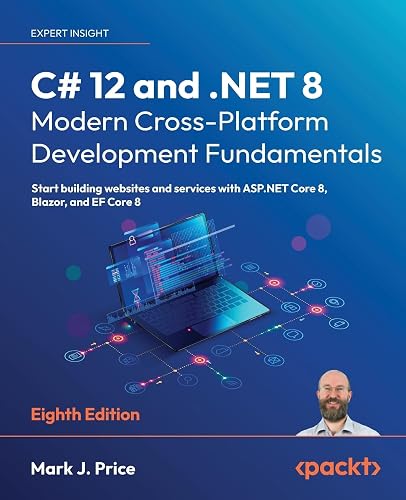
1. C# 12 and .NET 8 – Modern Cross-Platform Development Fundamentals by Mark J. Price
An exhaustive, practical guide covering core C# syntax, OOP concepts, collections, and modern .NET features without engine-specific fluff. Ideal for aspiring developers who want a solid programming background before tackling Unity scripting.
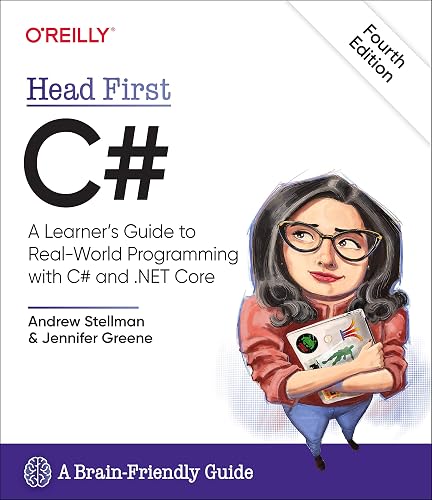
2. Head First C# by Andrew Stellman and Jennifer Greene
A highly visual, interactive approach to C# using puzzles and hands-on projects to teach interfaces, events, delegates, and inheritance. Perfect for complete programming novices who find standard technical manuals dry.
Game Design Theory
Programming brings a game to life, but design determines whether it’s actually fun. Design theory teaches you to break down mechanics, build meaningful player choices, and prototype rapidly before writing thousands of lines of code.
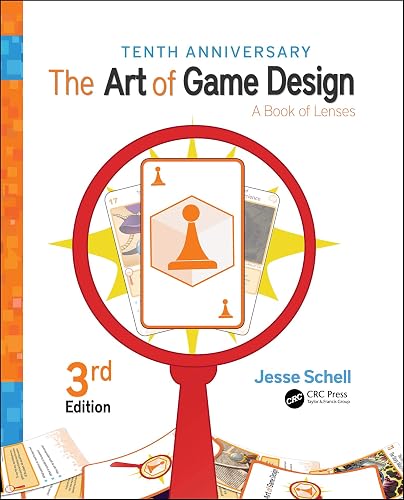
3. The Art of Game Design: A Book of Lenses by Jesse Schell
A classic across university programs and professional studios, presenting design through over 100 “lenses” — questions and perspectives on psychology, mechanics, aesthetics, and player motivation. Essential reading at any experience level.
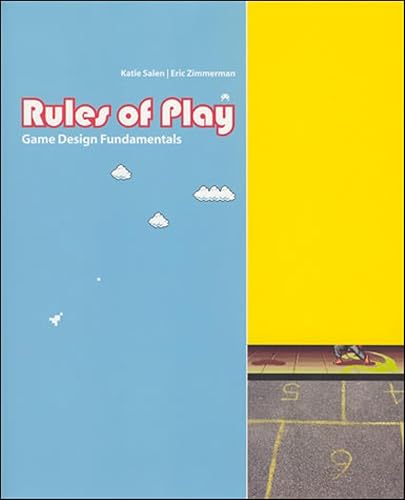
4. Rules of Play: Game Design Fundamentals by Katie Salen and Eric Zimmerman
A rigorous, theoretical framework treating games as formal systems and cultural artifacts, exploring emergent gameplay and feedback loops. Best suited to intermediate developers wanting a structured, academic foundation.
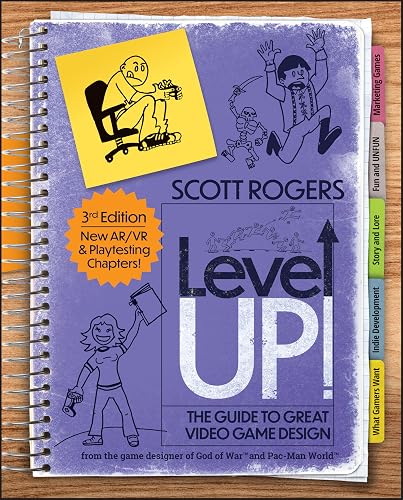
5. Level Up! The Guide to Great Video Game Design by Scott Rogers
A breezy, highly visual, intensely practical overview of the full creation pipeline — character movement, camera control, level layout, boss fights, and pitch documents. Tailored for indie developers who want actionable advice without academic jargon.
Unity-Specific
Once you understand C# fundamentals and design theory, you need to apply those concepts inside the engine itself.

6. Unity in Action: Multiplatform Game Development in C# by Joseph Hocking
A project-based walkthrough building 2D, 3D, and multiplayer prototypes, focused on writing clear C# within Unity’s component architecture. Ideal for intermediate programmers or ambitious beginners who learn by building complete mini-games.
7. Unity Cookbook by Matt Smith
Practical, solution-oriented recipes for everyday challenges — inventory systems, custom controllers, particle effects, pathfinding, save systems. Great for developers who want quick, modular code examples for concrete problems.
Math and Game Programming Patterns
As projects grow in scope, clean architecture and spatial math become essential.
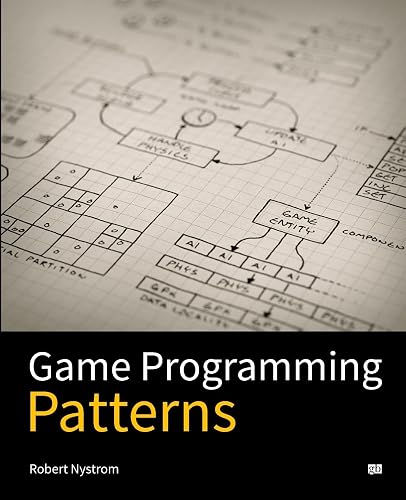
8. Game Programming Patterns by Robert Nystrom
Bridges basic programming ability and professional software architecture, showing how classic design patterns apply to games — Game Loop, Component Pattern, Object Pooling, State Machines, Observer Pattern, Spatial Partitioning. A must-read once your codebase starts feeling messy.
9. Essential Mathematics for Games and Interactive Applications by James M. Van Verth and Lars M. Bishop
A thorough grounding in the math behind modern engines — vectors, matrices, quaternions, ray casting, collision detection. Tailored for developers ready to master 3D math and graphics fundamentals under the hood.
The Books Compared
| Book | Level | What it teaches | How to use it |
|---|---|---|---|
| Head First C# | Beginner | C# from zero | Work through it in order |
| C# 12 and .NET 8 | Beginner to intermediate | C# and .NET in depth | Read the language chapters, keep the rest as reference |
| Unity in Action | Can already code | Unity through small projects | Build each project as you read |
| Unity Cookbook | Some Unity experience | Solutions to specific tasks | Dip in when you need a recipe |
| The Art of Game Design | Any | How to think about design | Read once, return to the lenses often |
| Level Up! | Any | Practical design: characters, cameras, levels | Read in order, or by chapter |
| Rules of Play | Intermediate | Design theory | Study slowly; it is a textbook |
| Game Programming Patterns | Intermediate | Structuring game code | One pattern at a time, alongside a project |
| Essential Mathematics for Games | Advanced | The maths under the engine | Reference when you need a topic |
Which Edition Should You Buy?
Programming books date faster than design books, so it is worth checking the edition before you order.
- C# books: the newest edition is not essential for Unity. Unity 6 compiles scripts as C# 9, so language features added after that will not work in your game scripts anyway (we cover what is and is not available in Unity’s C# version explained). A slightly older edition of a C# book teaches everything Unity can use. The current edition of Head First C# also includes Unity projects between chapters, which makes it a particularly good fit.
- Unity books: expect menus and screenshots to differ. Unity changes faster than books can be printed. The scripting concepts carry over, but when a menu has moved, check the current Unity manual. Buy the latest edition of any Unity-specific title.
- Design books: any recent edition is fine. The Art of Game Design, Rules of Play and Level Up! teach ideas that do not expire.
One tip that saves money: Robert Nystrom has published the full text of Game Programming Patterns free to read on the book’s own website. Many readers still buy the print or ebook edition because it is easier to study from, but you can read a chapter first to see if the style suits you.
More Books Worth Your Time
These did not make the main list, but each is well regarded and fills a gap:
- The C# Player’s Guide by RB Whitaker. A friendly, game-themed introduction to C#, and a good alternative if Head First C# does not click for you.
- A Theory of Fun for Game Design by Raph Koster. A short, illustrated book about why games are fun at all. Easy to finish in a weekend.
- Blood, Sweat, and Pixels by Jason Schreier. Not a how-to, but the stories of how real games were made (and nearly were not) are the best preparation for scoping your own project.
- The Pragmatic Programmer by David Thomas and Andrew Hunt. General programming habits such as version control, debugging and avoiding duplication, which apply directly to Unity projects.
A Recommended Reading Order for Beginners
Don’t try to read all of these at once. Follow a structured, multi-phase roadmap instead:
Phase 1 — Build the C# foundation. Start with Head First C# if you’re brand new to programming, or C# 12 and .NET 8 if you already have some coding experience. Spend a few weeks on variables, loops, OOP, and collections.
Phase 2 — Applied Unity development and core design. Read Unity in Action alongside The Art of Game Design. Build simple prototypes while reflecting on Schell’s lenses to make your mechanics engaging.
Phase 3 — Refactoring and architecture. Once you’ve built two or three small prototypes, read Game Programming Patterns — you’ll recognize the exact spaghetti-code pain points it addresses, making patterns like Object Pools and Finite State Machines instantly valuable.
Phase 4 — Specialization. Dive into Level Up! to refine level design and game feel, or tackle Essential Mathematics for Games if you want to write custom physics, shaders, or complex 3D systems.
Balancing programming practice, design theory, and engine-specific implementation gives you both the technical confidence and creative vision to take a project from concept to completed release.
FAQ
Are books still worth it when there are so many free Unity tutorials?
Yes, for a different job. Tutorials are best for a specific task, such as adding a health bar. Books are best for building the underlying understanding that lets you solve problems no tutorial covers. Most people who get stuck following tutorials are missing C# fundamentals, which is exactly what a book fixes.
What is the best book to learn Unity for a complete beginner?
Start with C#, not Unity. Head First C# teaches programming from zero and includes Unity projects along the way. Once you are comfortable with classes, methods and collections, move on to Unity in Action.
Do I need to learn C# before Unity?
You do not need to finish a C# book first, but you will progress much faster with the basics in place: variables, if statements, loops, methods and classes. A few weeks on those saves months of confusion later.
Is there a free PDF of The Art of Game Design?
There is no free legal PDF; the book is sold in print and as an ebook, and many public and university libraries carry it. Jesse Schell has released a companion Deck of Lenses app, which gives you the questions from the book in card form. If you want a free book, Game Programming Patterns can be read in full on its author’s website.
Do I need to be good at maths to make games?
Not to start. Unity handles most of the maths for you, and school-level arithmetic is enough for a first game. Vectors and rotations become useful as you progress, and our rotation and quaternions guide covers the part people find hardest. Save Essential Mathematics for Games for when you want to write custom physics or shaders.
Should I buy the print book or the ebook?
For programming books, an ebook is easier to search and to copy code from. For design books that you read away from the computer and annotate, print is more comfortable. Either works; choose the one you will actually open.
Keep reading: put Phase 1 into practice with our beginner’s guide to the Input System, pick up good habits early with the Unity C# naming conventions guide, and when you’re ready to build your own tools, try Editor Scripting 101.
Reader questions
Asked by readers of this article and answered by AI. Behavior can differ between Unity versions, so test in yours.


Leave a Reply